By Himalayan Magic Helicopter 26 Apr 2026
Everest Helicopter Tour With Landing Guide
The Everest region is one of the most iconic travel destinations in the world, attracting trekkers, climbers, and adventure seekers from across the globe. However, not everyone has the time, physical ability, or desire to complete a multi-day trek to reach Everest Base Camp. This is where the Everest Helicopter Tour with Landing becomes an exceptional alternative.
This tour offers a once-in-a-lifetime opportunity to witness Mount Everest up close within a few hours, combined with the thrill of landing at one of the highest accessible viewpoints in the world. It is designed for travelers who seek luxury, efficiency, and breathtaking Himalayan scenery without the physical demands of trekking.
Unlike standard mountain flights, this experience includes strategic landings, most notably at Kala Patthar, allowing you to step out, capture photographs, and fully immerse yourself in the grandeur of the Himalayas.
Whether you are a luxury traveler, a time-conscious explorer, or someone looking to celebrate a special occasion, this guide provides everything you need to know before booking an Everest helicopter tour with landing.
What is an Everest Helicopter Tour with Landing?
An Everest helicopter tour with landing is a premium aerial journey that departs from Kathmandu and flies deep into the Everest region, offering panoramic views of the world’s highest peaks along with one or more landing experiences at high-altitude locations.
The key feature that differentiates this tour from a standard mountain flight is the landing component. Instead of simply viewing Everest from the air, you physically land at carefully selected points, allowing for a much more immersive experience.
There are two main variations of Everest helicopter tours:
The first is the overfly tour, where the helicopter flies over Everest Base Camp and surrounding peaks without landing at high altitude. This option is quicker and slightly more budget-friendly but less immersive.
The second is the landing tour, which includes stops at locations such as Kala Patthar and Everest View Hotel. This is the most popular option, as it combines scenic flight with ground-level interaction.
The total duration of the tour is typically between four to five hours, depending on weather conditions, landing duration, and route adjustments.
Everest Helicopter Tour Itinerary (Step-by-Step)
The tour follows a well-structured itinerary designed to maximize views while maintaining safety and efficiency.
Early Morning Hotel Pickup
Your day begins early, usually around 5:00 AM, with a hotel pickup in Kathmandu. Early departure is essential because weather conditions in the Himalayas are most stable during the morning hours.
You will be transferred to the domestic terminal of Tribhuvan International Airport, where you complete check-in procedures and attend a short safety briefing.
Flight from Kathmandu to Lukla
The helicopter takes off shortly after sunrise, offering a gradual transition from the urban landscape of Kathmandu Valley to the rugged terrain of the Himalayas.
The first stop is Lukla, a small mountain town known as the gateway to the Everest region. Here, the helicopter refuels. This stop also allows for a short break before continuing the journey.
Lukla to Everest Region
After refueling, the helicopter flies deeper into the Khumbu region. This segment is one of the most visually rewarding parts of the tour.
You will witness aerial views of:
- Namche Bazaar, the main trading hub of the region
- Tengboche Monastery, a spiritual center surrounded by mountains
- Dense rhododendron forests and glacial rivers
- Snow-capped peaks including Ama Dablam, Lhotse, and Nuptse
The closer you get to Everest, the more dramatic the landscape becomes, with glaciers, icefalls, and towering peaks dominating the horizon.
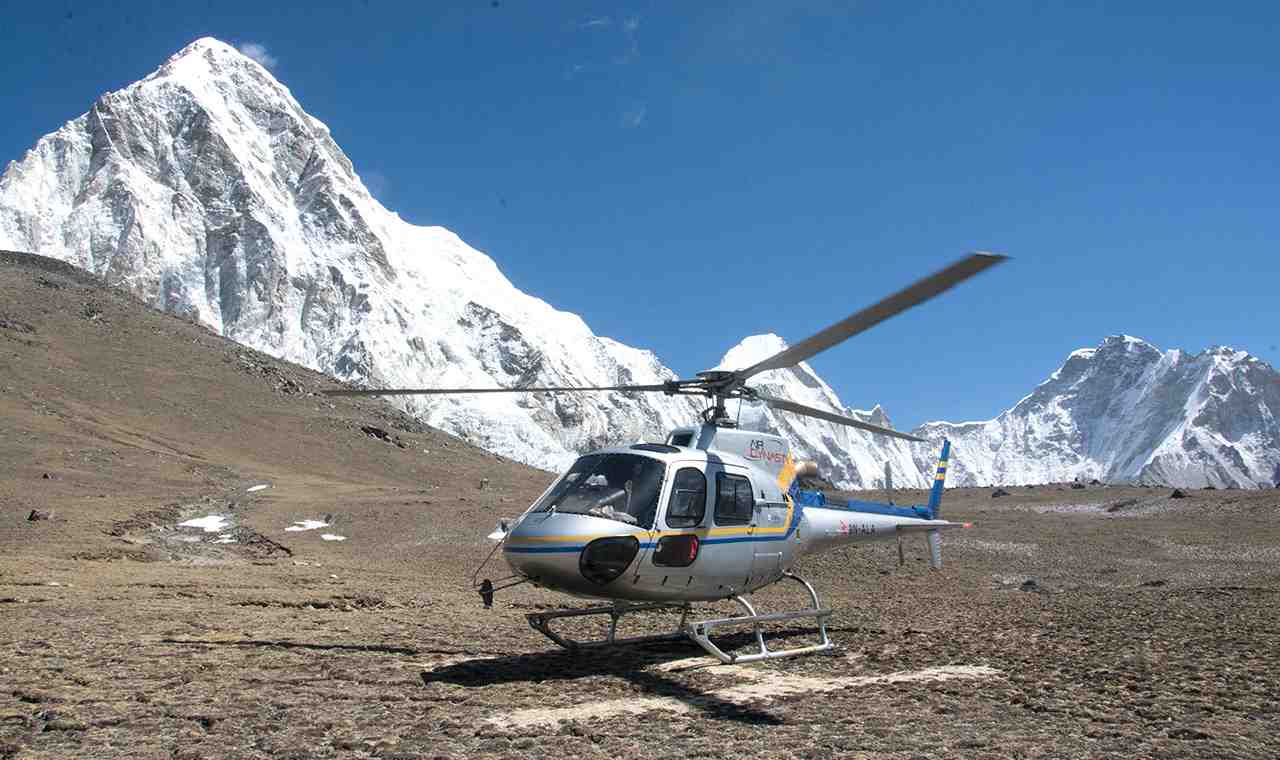
Landing at Kala Patthar
Kala Patthar is the highlight of the tour. Situated at an altitude of approximately 5,545 meters, it offers one of the best viewpoints of Mount Everest.
Due to altitude and safety considerations, landing time is limited to around 10 to 15 minutes. During this time, you can step out, take photographs, and enjoy unobstructed views of Everest and surrounding peaks.
This is the closest most travelers will ever get to Mount Everest without undertaking a full expedition.
Everest View Hotel Stop
After Kala Patthar, the helicopter descends to a lower altitude and lands near Everest View Hotel, one of the highest luxury hotels in the world.
Here, you have the option to enjoy breakfast or tea while admiring panoramic mountain views. This stop adds a touch of comfort and relaxation to the otherwise high-adrenaline experience.
Return Flight to Kathmandu
The return journey follows the same route, offering a final chance to capture the beauty of the Himalayas from above. You will land back in Kathmandu by late morning, completing the tour within half a day.
Everest Helicopter Landing Locations Explained
Understanding the landing points helps set realistic expectations and enhances your overall experience.
Kala Patthar is the primary landing site. It is widely regarded as the best viewpoint for Mount Everest because the peak itself is not fully visible from Everest Base Camp.
Everest Base Camp landings are rare and often restricted due to safety concerns, glacier conditions, and environmental regulations. In most cases, the helicopter may hover or briefly touch down depending on conditions.
Everest View Hotel serves as a secondary landing point at a safer altitude. It offers a comfortable environment to relax, take photos, and enjoy refreshments.
Everest Helicopter Tour Cost Breakdown (2026)
The cost of the tour depends on whether you choose a group joining option or a private charter.
Group joining tours are the most economical option. You share the helicopter with other travelers, and the cost is calculated per person. Prices typically range from USD 900 to USD 1,300 per person.
Private charter tours are ideal for families, couples, or small groups seeking exclusivity. The cost for a full helicopter ranges from USD 4,500 to USD 6,000, depending on the season and service provider.
Most packages include helicopter flights, airport transfers, necessary permits, and basic safety equipment such as oxygen support.
However, meals, personal expenses, and gratuities are usually not included and should be budgeted separately.
Group Joining vs Private Charter
Choosing between group joining and private charter depends on your budget, schedule, and travel preferences.
Group joining tours are more affordable and operate on fixed schedules. They are suitable for solo travelers and those looking to reduce costs.
Private charters offer complete flexibility, allowing you to customize departure time, landing duration, and itinerary. They provide a more personalized and comfortable experience.
Best Time for Everest Helicopter Tour
The best seasons for the tour are spring and autumn.
Spring, from March to May, offers stable weather, clear skies, and moderate temperatures. It is one of the most popular times for helicopter tours.
Autumn, from September to November, is considered the peak season due to excellent visibility and dry conditions.
Winter tours are possible and often provide the clearest views, although temperatures are significantly lower.
The monsoon season, from June to August, is generally not recommended due to poor visibility and frequent flight disruptions.
Weather and Flight Safety
Weather plays a critical role in helicopter operations in the Himalayas. Flights are highly dependent on visibility, wind conditions, and cloud cover.
Delays and cancellations are common, especially during transitional seasons. It is advisable to keep at least one buffer day in your itinerary.
Helicopter operators follow strict safety protocols, including experienced pilots, regular maintenance, and real-time weather monitoring.
Altitude and Safety Considerations
Altitude is one of the key factors to consider during the tour. Kala Patthar sits at over 5,500 meters, where oxygen levels are significantly lower.
To minimize risks, landing duration is kept short, and helicopters often operate shuttle flights to manage weight and altitude limitations.
Supplemental oxygen is typically available onboard as a precaution.
What You Will See During the Tour
The Everest helicopter tour offers unparalleled views of the Himalayan range.
You will see Mount Everest, the highest peak in the world, along with Lhotse, Nuptse, and Ama Dablam. The Khumbu Glacier and Icefall add dramatic texture to the landscape.
Traditional Sherpa villages, suspension bridges, and monasteries provide a glimpse into the culture of the region.
Everest Helicopter Tour vs Trek
Comparing the helicopter tour with the Everest Base Camp trek helps travelers make informed decisions.
The helicopter tour takes a few hours, while the trek requires 10 to 14 days. The cost of the trek is generally lower, but it requires physical fitness and time commitment.
The helicopter tour offers luxury, speed, and comfort, while the trek provides a deeper cultural and physical experience.
Permits Required
The tour requires two main permits: the Sagarmatha National Park permit and the Khumbu Pasang Lhamu Rural Municipality permit.
These are usually arranged by the tour operator and included in the package cost.
What to Pack for the Helicopter Tour
Even though the tour is short, proper preparation is essential.
You should carry warm clothing, gloves, sunglasses, and a camera. The temperature at high altitude can be extremely cold, even during sunny days.
Weight Limit and Seating Arrangement
Helicopters used for Everest tours typically accommodate up to five passengers. Weight distribution is carefully managed to ensure safe operation.
In some cases, passengers may be split into smaller groups for high-altitude landings, with shuttle rotations to Kala Patthar.
Booking Process and Tips
Booking in advance is recommended, especially during peak seasons. Choose a reputable operator with strong safety records and transparent pricing.
Last-minute bookings are possible but may limit availability and flexibility.
Frequently Asked Questions
Many travelers wonder about the duration of the tour, which typically lasts four to five hours.
Landing at Everest Base Camp is not always guaranteed due to safety and environmental factors.
The tour is generally safe when operated by experienced pilots under proper weather conditions.
Travel insurance is highly recommended, particularly coverage for high-altitude activities.
Why Choose a Trusted Operator
Selecting the right operator is crucial for a safe and enjoyable experience. Look for companies with experienced pilots, good reviews, and clear communication.
A trusted operator ensures proper safety measures, well-maintained helicopters, and a seamless booking process.
Conclusion
The Everest Helicopter Tour with Landing is one of the most extraordinary travel experiences available in Nepal. It combines adventure, luxury, and natural beauty into a single, unforgettable journey.
For those who want to witness Mount Everest up close without the demands of trekking, this tour offers the perfect solution. With proper planning, the right season, and a reliable operator, you can enjoy a safe and breathtaking Himalayan adventure.
If you are ready to experience Everest from a unique perspective, this tour is undoubtedly worth considering.
Recent From Blogs

17 Feb 2024
25 Apr 2026